Webflow Affiliate Program 2026: Proven and Easy Guide
I often recommend Webflow to clients and readers as a professional website builder. To learn about Webflow affiliate program, I consulted their official page.
I discovered a program that offers good compensation, an extended cookie duration, and increased rewards for long-term participants. This article, based on details directly from Webflow’s affiliate page and program guidelines, provides all the essential information before applying.
What Is Webflow?
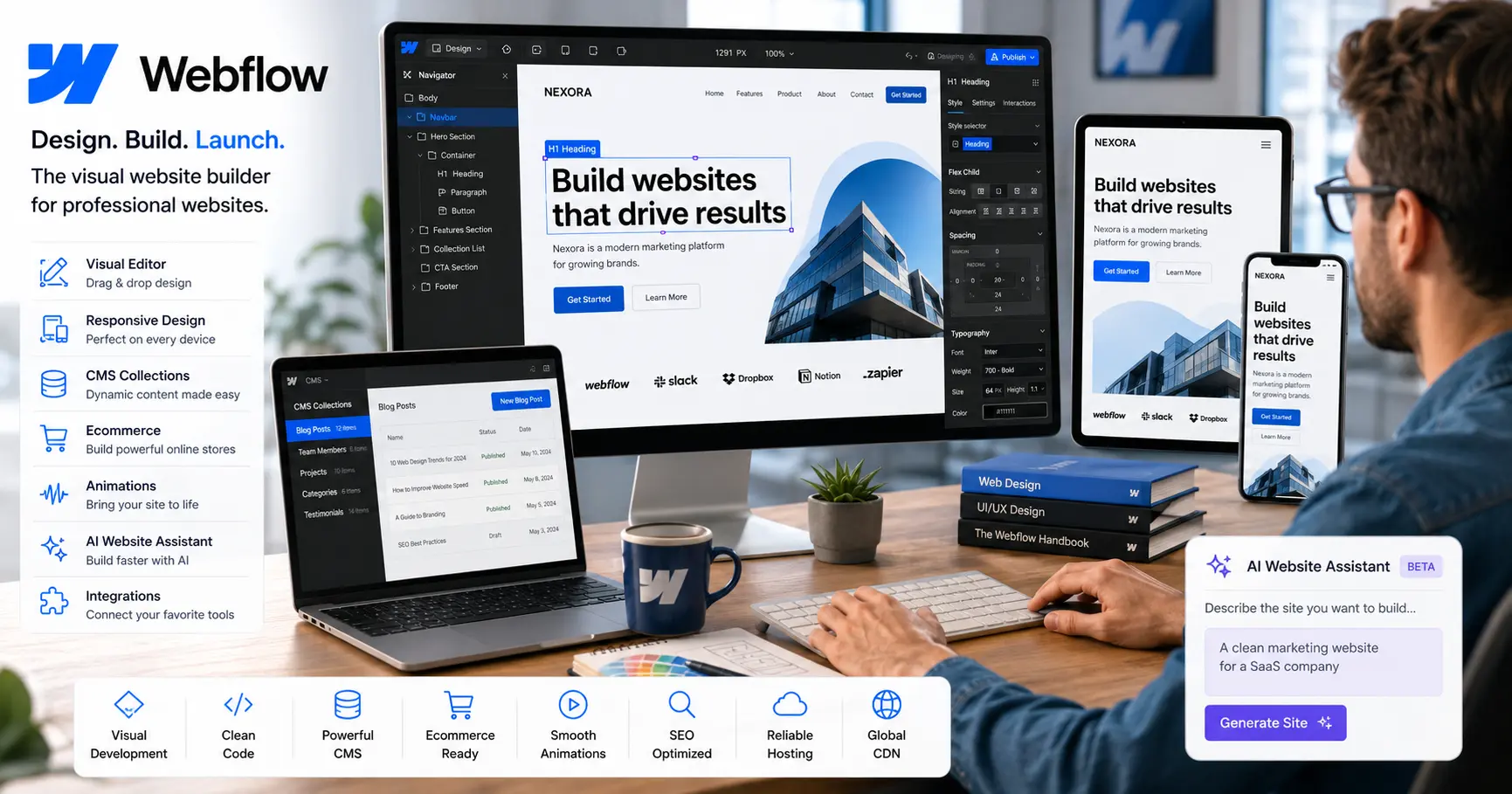
Webflow is a visual website builder for creating professional sites with simple tools and advanced design controls.
Brands like IDEO, monday.com, and The New York Times use Webflow. That means it is not a small business tool. It supports CMS, ecommerce, localization, and AI.
Who uses it? Marketers, designers, developers, & agencies. So the affiliate program has wide reach. If your content covers web design, no code, marketing, or freelancing, your readers likely already know Webflow or are looking for it.
For more details, check Webflow’s Pricing page and their Templates gallery to see real-world sites built on the platform. Webflow University is worth a look too if you plan to write detailed tutorials rather than just a general overview.
What Is Webflow Affiliate Program?
The Webflow affiliate program is for creators, influencers, bloggers, and educators who earn by referring new customers. It’s not designed for agencies or freelancers building sites for individual clients. Webflow keeps that group separate through its own Certified Partner Program, which we will get into a bit later.
If your content reaches marketers, founders, designers, or developers, this program fits. Apply, share your link, and earn when someone signs up for a paid Webflow plan.
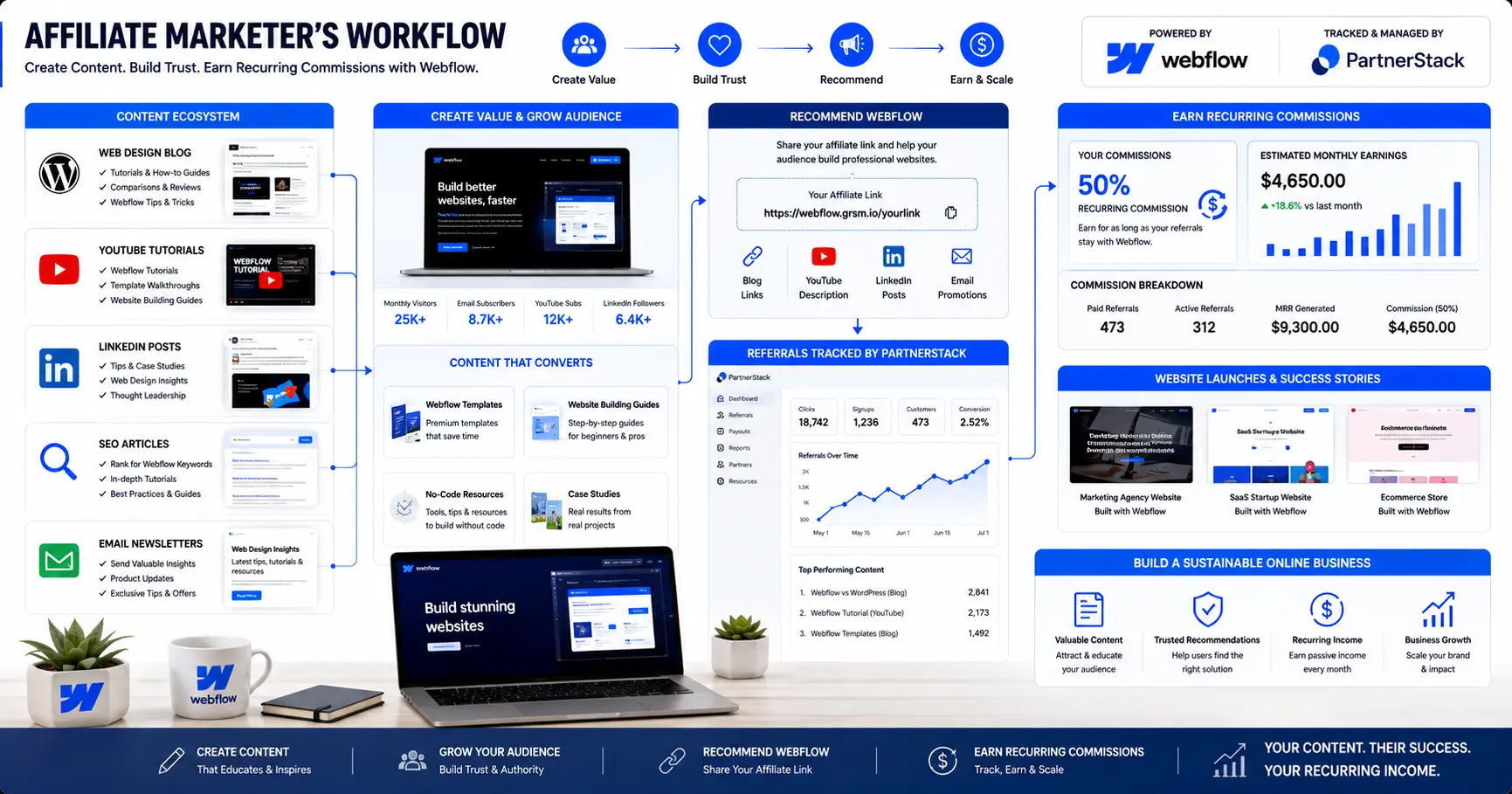
The program runs on PartnerStack. If you’re new, check our PartnerStack guide to learn how tracking, payouts, and dashboards work.
Webflow Affiliate Program Commission
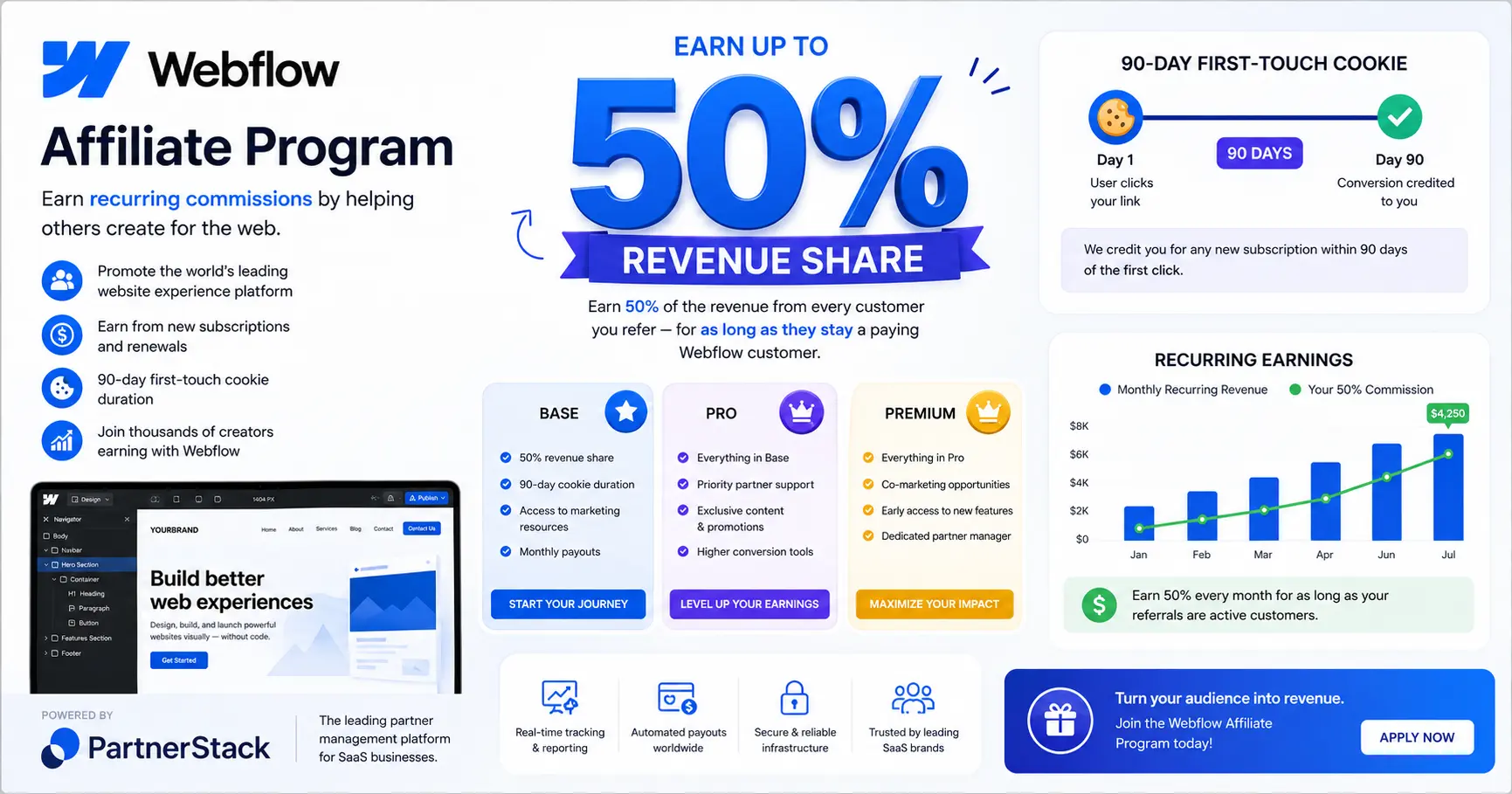
Here is the part most people care about first. Webflow pays a 50 percent revenue share on a new customer’s first eligible subscription, and this applies for up to 12 months on an active monthly plan or for one full annual plan purchase.
That means if someone you referred pays for Webflow every month, you keep earning that 50 percent share for up to a year. If they choose an annual plan instead, you earn the commission on that single annual payment.
It is worth being clear about what counts here. Commission only applies to a new customer’s first eligible subscription, not to every future purchase or renewal beyond that initial period at the base level. Referrals don’t count if the person was already in a sales conversation with Webflow when they clicked your link, so the program rewards truly new business.
Higher tiers improve this, which leads to the next section.
Cookie Duration
Webflow uses a 90 day cookie window, and it runs on first touch attribution. That second detail matters more than people usually notice.
First touch attribution means the very first affiliate link someone clicks is the one that gets credit, not the last one before they finally buy. So if a reader clicks your link, thinks it over for six weeks, clicks a different link somewhere else, and then signs up, you still get the commission because you were the first click in that chain.
Combined with a 90 day window, this gives content creators a real advantage. Long form reviews, comparison posts, and tutorials often bring in readers who take their time deciding. A 90 day first touch cookie means that research phase does not work against you the way it might with a shorter or last click only system.
Affiliate Tiers Explained
This is where the Webflow affiliate program gets more interesting than a lot of competitors. There are three tiers: Base, Pro, and Premium, and each one builds on the last.
Base tier gets you the standard 50 percent revenue share for up to 12 months on a new customer’s first eligible subscription. Every affiliate starts here, and there is no cap on how many people you can refer.
Pro Affiliate includes everything in Base, plus an additional 10 percent revenue share for up to 12 more months if that same customer renews after their first year. In practice, this means a referral who sticks around into year two keeps paying you, just at a lower rate than the initial 50 percent. Pro affiliates also get access to co marketing features and guest blogging opportunities that Base affiliates do not have.
Premium Affiliate takes it a step further, offering an additional 15 percent revenue share for up to 12 more months on renewals after the first year, along with everything from the lower tiers. Premium affiliates also get regular check ins with dedicated affiliate support and access to exclusive seasonal performance bonuses.
You do not choose your tier when you apply. Everyone starts at Base and moves up by staying active, driving paid customers, and participating in program challenges. It is a system that clearly rewards consistency rather than a single big referral and then going quiet.
Webflow Affiliate Program Requirements
Webflow is selective about who joins. You must be a creator, influencer, or blogger with a real following. B2B creators reaching marketers, founders, designers, or developers do the best.
You don’t need to be a paying Webflow customer, but knowing the platform helps if you plan to write about it.
Here is where it gets more useful than most affiliate program pages. Webflow openly lists the types of applicants they do not accept. That includes freelancers or agencies building Webflow projects for clients, loyalty or incentivized traffic sites, coupon and deal sites, subaffiliate networks, low quality or low traffic websites, and media buyers unless they have been pre approved.
If you do run paid ads as part of your strategy, those ads need to point to your own website rather than directly to a Webflow domain.
Once accepted, there are a few onboarding steps. You need to complete onboarding, publish a piece of content within 30 days of acceptance, and accept the official program agreement. Skipping that content requirement or dragging your feeton it is not a great look if you want to move up through the tiers later.
Who Should Join the Webflow Affiliate Program?
Web designers, no code educators, and marketing bloggers are the most obvious fit, since their audience is already looking for tools like Webflow. But the overlap goes further. Agencies creating websites for businesses can also benefit from promoting communication tools through the Aircall Affiliate Program, since clients who need a new website often need a better phone system too.
If your audience includes startups or agencies, the Apollo IO Affiliate Program is a good B2B choice to pair with Webflow. Many Webflow users also use a CRM, so the Pipedrive Affiliate Program is a natural fit, especially for freelancers and small agency owners.
Webflow Affiliate Program Sign Up
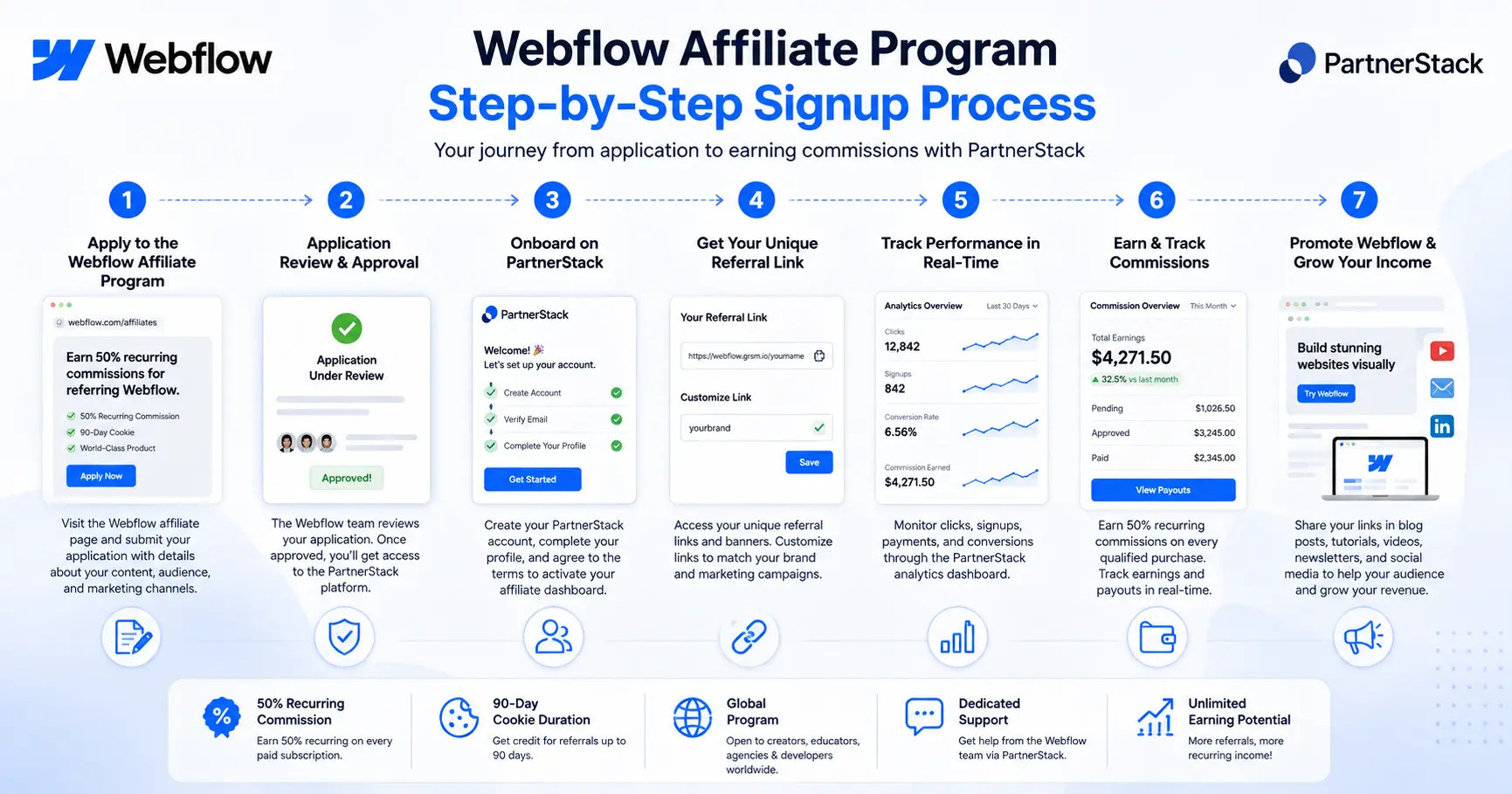
Signing up is done directly through the Official Webflow Affiliate Program page, and the application itself is more detailed than a lot of programs, which honestly works in your favor since it filters out low effort applicants.
The application has a few sections. First, you enter basic details like your name, business name, country, and email. You’ll also be asked if you build Webflow sites for clients, since freelancers and agencies are directed to the Certified Partner Program instead.
Next, you describe your affiliate strategy. This includes picking your primary promotion channels, such as YouTube, social media, blogging, newsletters, or template creation, and sharing links to the actual websites or accounts where you plan to post your affiliate link.
Webflow is upfront that leaving this section vague or inaccurate can lead to a denied application or lost commissions later on, so it is worth being specific here rather than rushing through it.
Finally, you review and agree to the program terms and submit your application. Webflow usually reviews applications within 10 business days, but their FAQ says it can take one to two weeks depending on how many applications they receive. Either way, patience is expected here rather than an instant approval.
Once you are accepted, you will need to apply through PartnerStack as well, since that is where your actual tracking link, dashboard, and payouts are managed.
Webflow Affiliate Program Login
Once you are approved, your affiliate account lives inside PartnerStack rather than on Webflow’s own site. Webflow requires all affiliates to register with PartnerStack in order to access program resources and actually receive commission payouts.
Your affiliate dashboard, where you will find your tracking link, performance stats, and payout information, is accessed through PartnerStack using the credentials you set up during onboarding. This is a fairly standard setup if you have promoted other SaaS products before, since PartnerStack is widely used across the industry.
Webflow Affiliate Program vs Webflow Partner Program
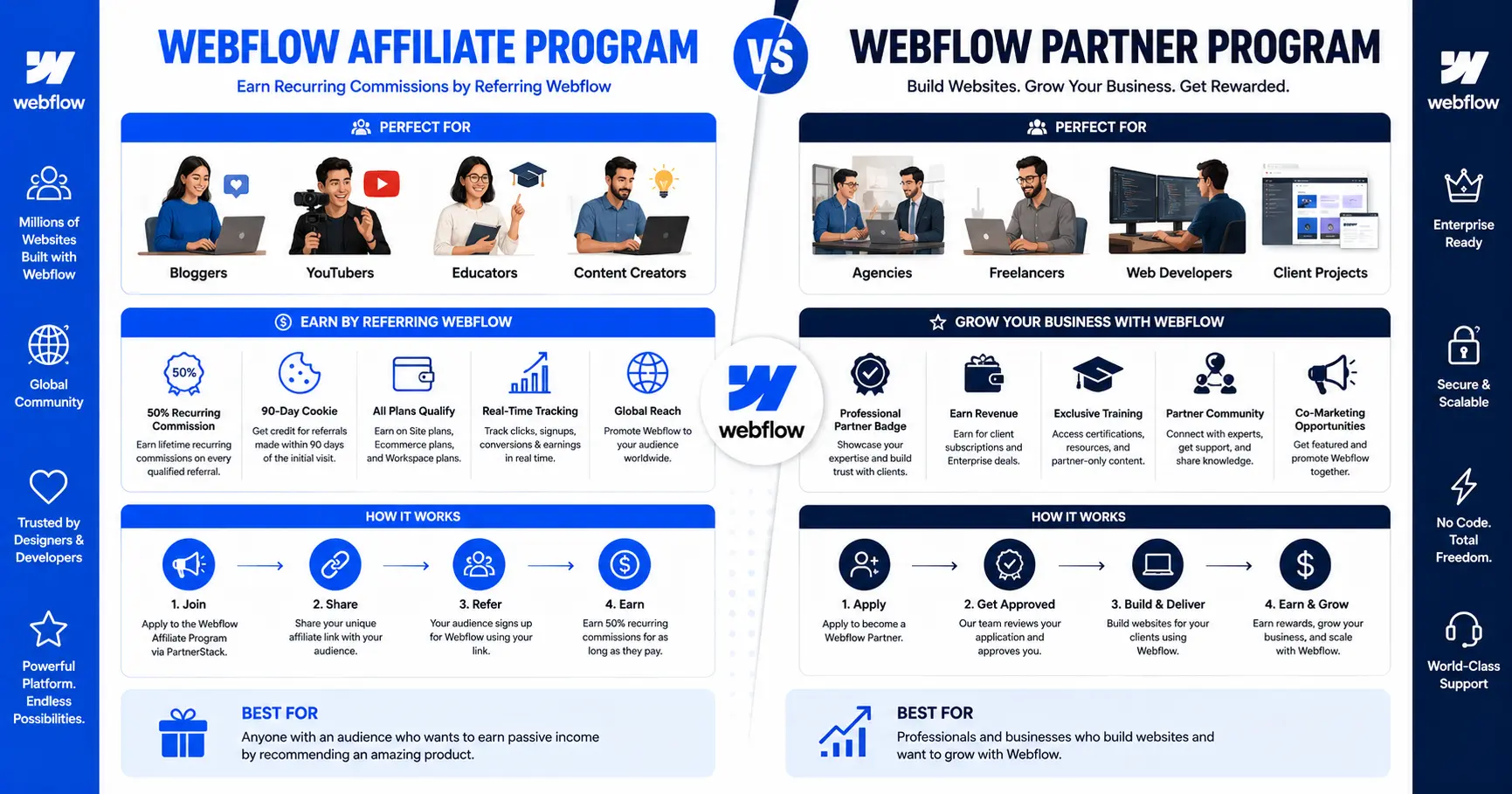
Webflow has two programs.
The Affiliate Program is for promoting Webflow online. The Partner Program is for building Webflow sites for clients. If that is your business model, the affiliate program specifically does not pay out on those client referrals. Webflow states this clearly: the affiliate program does not offer payouts on one to one referrals, so agency or freelance client work needs to go through the Partner Program instead.
In short, if you are creating content for an audience, apply to the affiliate program. If you are building sites for paying clients and want credit for bringing them onto Webflow, the Partner Program is the right fit.
Payment Methods
Payments and account management run through PartnerStack, which is standard practice for a lot of established SaaS affiliate programs. Webflow’s own page does not break down every specific payout method or minimum threshold publicly, so once you are approved, it is worth checking your PartnerStack dashboard directly or reaching out to the affiliate team for the exact payment schedule tied to your account and tier.
What is clear is that payouts are tied to the commission structure by tier, meaning Pro and Premium affiliates will see additional payments related to renewal commissions on top of their initial referral payouts.
Pros and Cons
Pros
- A strong 50 percent commission rate on a customer’s first eligible subscription.
- A generous 90 day cookie window using first touch attribution, which favors longer research and content driven traffic.
- A tiered system that keeps paying you on renewals if you reach Pro or Premium status.
- You can bring in unlimited referrals.
- Free to join, with no requirement to already be a paying Webflow customer.
- A well known, respected brand that is genuinely easy to recommend honestly.
Cons
- Not open to freelancers or agencies doing client work, since that falls under a separate Partner Program.
- A fairly strict list of rejected applicant types, including coupon sites and low traffic websites.
- Application review can take one to two weeks, so it is not instant.
- Commission on the base tier does not automatically continue past the first 12 months unless you move up to Pro or Premium.
- Specific payout methods and thresholds are not fully detailed on the public affiliate page.
Is the Webflow Affiliate Program Worth It?
Based on everything covered here, yes, especially if your audience already includes marketers, designers, developers, or small business owners who might genuinely benefit from a tool like Webflow.
The 50 percent commission rate on its own is already competitive compared to a lot of software affiliate programs. Add the 90 day first touch cookie, and you have a setup that works with how people actually research tools like this, rather than punishing them for taking their time.
The tiered system is the real standout though. Most programs offer a flat rate and nothing more. Webflow gives you a reason to stay active and consistent, since reaching Pro or Premium status means your referrals keep paying you well into a second year.
The main thing to be realistic about is approval. Webflow is clearly filtering for genuine content creators with real, relevant audiences, not just anyone with a website. If your content fits that description, this is one of the stronger web design and SaaS affiliate programs available right now.
If your audience includes designers and remote teams, theMiro AffiliateProgram is another excellent option to promote alongside Webflow.
FAQs
How much commission does the Webflow affiliate program pay?
You earn a 50 percent revenue share on a new customer’s first eligible subscription, for up to 12 months on a monthly plan or for one annual plan purchase.
What is the Webflow affiliate cookie duration?
The cookie lasts 90 days and uses first‑touch attribution, meaning the first link clicked gets credit, not the last.
Is the Webflow affiliate program free to join?
There’s no cost to apply, and you don’t need to be a paying Webflow customer.
How do I log in to my Webflow affiliate program account?
Affiliate accounts are managed through PartnerStack. You will log in there using the credentials created during onboarding to access your link and track performance.
Can freelancers or agencies join the affiliate program?
Not for client work. Freelancers and agencies building Webflow sites for clients should apply to the Certified Partner Program instead, since the affiliate program does not pay out on one to one client referrals.
What are the Webflow affiliate tiers?
There are three levels: Base, Pro, and Premium. Base pays 50 percent for up to 12 months. Pro adds another 10 percent for up to 12 additional months on renewals. Premium adds 15 percent for up to 12 additional months on renewals, along with extra perks like dedicated support check ins.
How long does approval take?
Webflow states applications are typically reviewed within 10 business days, though their FAQ also mentions it can take one to two weeks depending on application volume.
Final Verdict
The Webflow affiliate program is one of the more thoughtfully structured programs I have come across in the web design and SaaS space. A 50 percent commission rate, a generous 90 day first touch cookie, and a tier system that rewards long term consistency all add up to a genuinely strong offer for the right kind of content creator.
It is not a fit for everyone. Agencies and freelancers doing client work need the Partner Program instead, and Webflow is clearly selective about who gets approved into the affiliate side. But if your content already reaches designers, marketers, developers, or small business owners, this is a program worth applying for rather than skipping over.
Many affiliates combine Webflow with AI writing tools like the GetGenie Affiliate Program to create complete website building and content creation guides. Since people creating websites also need content to put on them, the ProWritingAid Affiliate Program rounds out that same content strategy nicely.
As always, program terms, tier requirements, and commission structures can change over time. Before building content around this, it is worth taking a few minutes to review the current details directly on Webflow’s official affiliate page and program agreement.
